Australia is facing a rising cancer
burden: in 2023, about 165,000
new cases were diagnosed (≈ 452 per day) and
51,300 people died from cancer (≈ 140 per day).
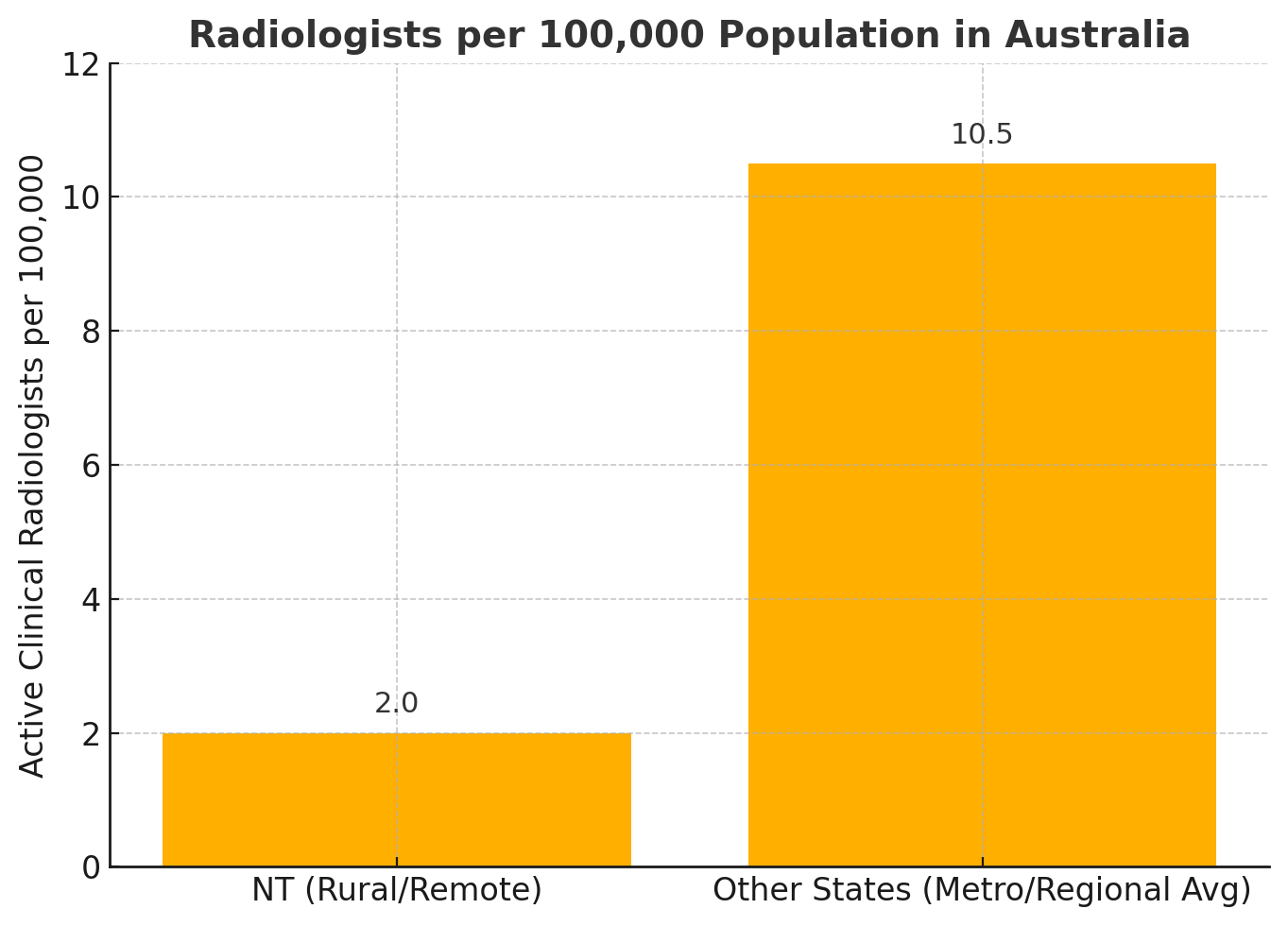
While imaging services are widely available, access
to radiologists is uneven — for example, the Northern
Territory has only ~2 active clinical radiologists per 100,000
people compared to ~10–11 per 100,000 in several other
states.
This highlights the critical
role radiologists play in cancer care, and the challenge of ensuring
timely screening and diagnosis for Australians in rural and remote areas.
Radiologists in Screening Programs
National screening programs
highlight just how visible their work is. For instance, take Breast
Screen Australia, where over 1.7 million
women participated in 2020–21, and radiologists helped
identify more than 11,000 cancers. Every single
mammogram in this program is read by at least two radiologists to
maximise accuracy.
Beyond breast screening,
radiologists are also central to lung cancer trials,
where CT scans are being tested in high-risk groups, and they play a
key role in assessing follow-up investigations for bowel and cervical
cancer. Although patients may never meet the radiologist face to face,
their expertise is woven into every stage of Australia’s screening programs.
The Rural Access Challenge
While city residents may take
access to imaging for granted, the picture is very different outside
metropolitan Australia. Only around 12–14%
of radiologists practise in regional and rural
areas. This workforce imbalance creates barriers such as:
Longer waits for
scans to be reported.
Limited access to advanced imaging like MRI or
PET, often requiring long travel.
Fewer interventional radiology
services outside major centres.
These barriers matter. A delayed
scan can mean a delayed diagnosis, which in turn can affect treatment
options and outcomes.
The good news is that technology
is starting to bridge this gap. Teleradiology
services allow specialists in metropolitan centres to report
scans taken in rural hospitals. Mobile imaging units
bring mammography and CT closer to communities. And increasingly, digital appointment booking
and coordination platforms are helping clinics
connect patients with imaging services more efficiently — reducing
bottlenecks and making access smoother, even when specialists are
based far away.
Rural Australians still face
challenges, but these innovations show how smarter systems can help
ensure timely cancer care, regardless of postcode.
Teamwork Behind the Scenes
Radiologists rarely meet patients
face to face, yet their input is central to how cancer care unfolds.
In multidisciplinary team meetings (MDTs), they
present imaging findings alongside oncologists, surgeons, and
pathologists. These discussions often shape the entire treatment plan.
A single scan can carry enormous
weight. It may reveal whether surgery is possible, how extensive it
should be, or if chemotherapy or radiotherapy is the better first
step. Radiologists also help monitor whether treatment is working — or
if plans need to change.
For patients, this
behind-the-scenes teamwork can make the difference between early,
effective intervention and delayed, more complex care.
Looking Ahead: Access, Collaboration, and Better Outcomes
From the first mammogram to
follow-up scans years after treatment, radiologists are silent but
essential partners in the cancer journey. Their expertise ensures
cancers are detected earlier, diagnosed more accurately, and monitored effectively.
For Australians — especially
those in rural and remote areas — access to radiologists isn’t just
a matter of logistics. It can determine how quickly cancer is found,
how effectively it’s treated, and ultimately, the chance of survival.
At the same time, the way
healthcare teams work together is changing. Radiologists are
increasingly looking to connect more directly with GPs and primary
care providers through digital platforms that simplify
appointment booking and streamline referrals. This makes it
easier for clinics to link patients with the right imaging services,
reduce bottlenecks, and ensure results flow quickly back to the
treating team.




 AUS
AUS can
can